
 By Eric Smith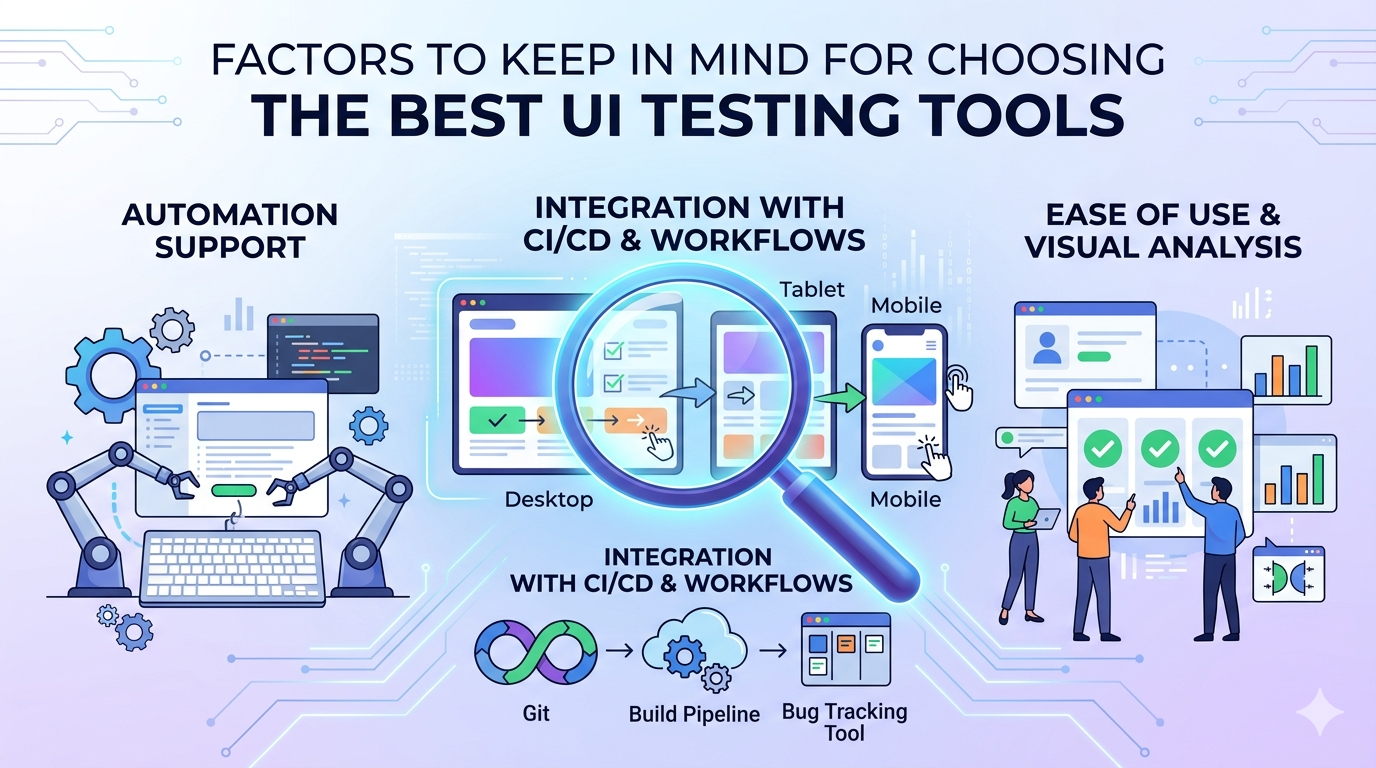
A smooth digital interface demands proper testing and monitoring. Most development teams rely on UI testing tools to check how their application screens behave when in use. Such tools enable testers to examine how buttons, navigation, and screens respond to different user interactions. When an appropriate testing tool is chosen, a team can easily spot any visual problems in its interface. This guarantees a smooth, consistent interface across different browsers and user environments.
- Role of Interface Validation in Product Quality
Interface validation tests whether all items on the screen function correctly when the user interacts with the interface. The user interface testing tools perform simulations of activities such as clicking on links, submitting forms, clicking on menu items, and navigating the pages. The simulated activities allow the tester to see the interface in real-life situations. This ensures that problems such as broken links, layout problems, and navigation problems are fixed, giving confidence that the interface works smoothly to create a comfortable user experience.
- Impact of Consistent User Experience
An important aspect of a consistent digital interface is consistency. The user will feel comfortable if all the screens look and feel the same in all browsers and devices. The UI testing tools provide the testers with the opportunity to ensure that all the elements are properly displayed on all screens. Visual behavior is always monitored, and changes in the layout or conflicts in the interface are detected in a timely manner, thereby improving the consistency and hence the usability of the product.
- Automation Capability and Testing Efficiency
Automation support is one key aspect to be considered while choosing testing platforms. Many UI testing tools have provisions to generate scripts to repeat user actions programmatically. Such scripts help perform numerous interface tests within a limited time frame. Automated testing also aids in performing regression testing at regular intervals after introducing any new features in the application. It ensures that any changes to the interface do not lead to any visual or interaction issues during development and enhancement.
- Integration with Development Workflows
Another significant factor is the integration of testing tools with development environments. The UI testing tools should integrate well with continuous integration systems, version control systems, and defect tracking systems. If a UI testing tool integrates well with an application, it can run tests whenever a developer updates the application’s code. This will enable developers to identify interface issues with an application as soon as they occur.
- Ease of Use for Testing Teams
The other important thing to consider when looking for a testing tool is how user-friendly it is. When a tool is difficult to understand, more time is spent understanding how to use it than actually analyzing it. Good UI testing tools have simple user interfaces. This means that a testing team can focus on analyzing how the screen works and how it can be visualized.
The selection of the appropriate testing environment is an essential factor that can help in maintaining the quality of the interfaces. The interfaces need to check the compatibility, the ability of the tools for automation, the workflow, and the usability of the tools. These factors are essential for the appropriate selection of the solution. Good GUI testing tools can help in maintaining the stability of the interfaces. Therefore, if the appropriate solution is selected, the interfaces can be more appropriately tested.