
 By Eric Smith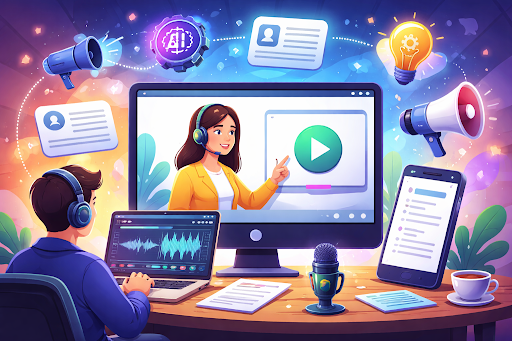
Instructional videos have become one of the most powerful ways to teach, train, and inspire. Whether you are a course creator, business owner, or corporate trainer, video allows you to explain ideas clearly and connect with your audience on a deeper level. But creating professional voiceovers and background audio has often been the most time-consuming part of the process.
Today, advanced AI audio technology is changing that. With more control over voice, emotion, tone, and pacing, creators can now produce studio-quality narration and music in minutes. This shift is helping educators and brands build engaging instructional videos faster than ever before.
When viewers watch instructional content, they expect clarity and flow. Even if visuals are strong, poor narration can distract learners and reduce trust. Clear speech, natural pacing, and the right emotional tone help information feel easier to understand and remember.
Professional voiceovers traditionally required recording equipment, editing software, and skilled voice artists. For many creators, this added cost and delay made video production harder to scale. Now, AI-driven voice and music tools are closing that gap by delivering realistic narration directly from text.
The ability to adjust tone, language, and expression makes a big difference in training content. A calm and steady voice may suit technical lessons, while a warm and enthusiastic style works better for onboarding or motivational tutorials. This level of control allows creators to match the audio to the learning objective.
One of the biggest shifts in video production is the integration of advanced voice models directly into video platforms. Instead of exporting scripts to separate audio tools, creators can now generate narration inside the same workspace where they build visuals.
In fact, elevenlabs ai is now available within invideo’s creative environment, allowing users to generate realistic AI voiceovers, songs, and music directly from text. This integration simplifies the workflow by keeping script writing, audio generation, and video editing connected in one streamlined process.
With this setup, creators can:
- Convert written lessons into natural-sounding narration instantly
- Choose from multiple languages and accents
- Control emotion, tone, and pacing for voice delivery
- Adjust style, mood, and tempo for background music
- Test different variations without re-recording
This removes the friction that often slows down instructional video production. Instead of waiting for voice recordings or editing multiple takes, creators can experiment in real time and finalize content quickly.
Instructional videos used to require microphones, soundproof rooms, and advanced editing skills. While professional setups still have value, many educators and small teams do not have access to them.
AI-powered voice and music generation removes these barriers. You can write your script, choose a voice style that fits your topic, and generate narration within seconds. If something does not sound right, you can refine the tone or pacing instead of re-recording everything from scratch.
This flexibility is especially helpful for:
- Online course creators updating modules regularly
- Businesses producing product walkthroughs
- Schools developing digital lessons
- Trainers building onboarding materials
- Content creators running faceless educational channels
Because the process is fast, creators can focus more on clarity and storytelling rather than technical setup.
Instructional videos are not just about information. They are about engagement. A flat delivery can make even the most useful content feel dull. On the other hand, expressive narration can keep viewers attentive and motivated.
With advanced voice controls, you can fine-tune how a lesson feels. For example, you might choose:
- A confident and authoritative tone for compliance training
- A friendly and supportive tone for beginner tutorials
- A calm and steady voice for technical documentation
- A lively and upbeat style for marketing explainers
Music also plays an important role. Background tracks can set the mood, highlight transitions, and make content feel polished. Being able to adjust tempo and mood ensures that the music complements the lesson instead of overpowering it.
When voice and music are generated from the same script-based workflow, everything stays aligned. This harmony makes the final video feel intentional and professional.
Global audiences expect content in their native language. Translating scripts is only part of the challenge. Recording voiceovers in multiple languages often requires hiring different voice artists and managing separate production cycles.
With integrated AI voice systems, creators can generate multilingual narration quickly. By selecting language preferences and adjusting delivery style, you can create consistent instructional videos for diverse regions.
This is particularly useful for:
- International online courses
- Corporate training programs in global companies
- Software tutorials for worldwide users
- Customer support walkthroughs
- Educational YouTube channels targeting multiple markets
Instead of limiting your reach to one language, you can expand your content library with minimal extra effort.
While voice is essential, instructional videos require more than just narration. Visual storytelling, text overlays, transitions, and pacing all contribute to the final impact.
That is where platforms like invideo bring everything together. Beyond audio integration, invideo also provides an ai video creator that transforms text prompts into complete videos. This makes it easier for educators and marketers to move from concept to finished content without switching tools.
With a connected workflow, creators can:
- Write a lesson outline
- Generate voice narration
- Add matching visuals
- Insert subtitles and transitions
- Export a ready-to-share video
This unified approach saves time and reduces complexity. Instead of juggling separate software for scripting, audio, and editing, everything stays in one place.
Engagement is not just about how a video looks. It is about how it flows. Clear narration, natural pacing, and supportive background music all help viewers stay focused.
When audio matches the message, learners absorb information more easily. Pauses between sections allow time to process key ideas. Emotional emphasis highlights important points. These subtle elements improve comprehension and retention.
AI-driven voice tools allow creators to refine these details quickly. If a section feels rushed, you can slow down the pacing. If a key concept needs emphasis, you can adjust tone. This iterative process strengthens the overall learning experience.
Over time, consistent quality builds trust. Viewers are more likely to complete lessons, recommend courses, and return for additional content.
Not all instructional videos follow the same format. Some are structured lectures, while others are product demos, animated explainers, or screen recordings.
AI-generated voice and music adapt well to various formats:
- Step-by-step software tutorials
- Animated educational clips
- Product walkthroughs
- Corporate onboarding presentations
- Marketing explainer videos
Because the audio is generated from text, you can easily adjust scripts for different formats without starting from zero. This flexibility makes it easier to repurpose content across platforms such as learning management systems, social media, and internal company portals.
Professional voice artists and music licensing can be expensive, especially for large video libraries. For startups, educators, and small businesses, these costs can limit how much content they produce.
AI-powered voice and music generation provides a cost-effective alternative while maintaining high quality. By controlling tone, language, and tempo directly from the interface, creators achieve polished results without additional studio expenses.
Lower costs mean more experimentation. You can test different teaching styles, launch pilot courses, and update content frequently without worrying about budget constraints.
The way we create educational content is evolving. Faster production cycles, realistic voice synthesis, and integrated video tools are reshaping how ideas move from script to screen.
When advanced voice systems are seamlessly built into video platforms, creators gain both speed and creative control. The integration of elevenlabs ai into modern video workflows reflects this shift toward smarter, more connected production environments.
As these tools continue to improve, the focus will shift further toward storytelling and clarity. Instead of spending time on technical barriers, educators and marketers can concentrate on delivering meaningful lessons that inspire and inform.
Instructional videos are one of the most effective ways to teach and connect. With realistic AI voiceovers and flexible music generation, creators can now build engaging lessons without traditional studio limitations. The ability to control tone, language, and pacing helps transform simple scripts into compelling learning experiences.
By combining advanced audio tools with streamlined video creation workflows, modern platforms are empowering creators to produce high-quality instructional content faster and more efficiently. The result is clearer communication, stronger engagement, and greater creative freedom for anyone ready to share knowledge with the world.
 Prime Star