
 By Eric Smith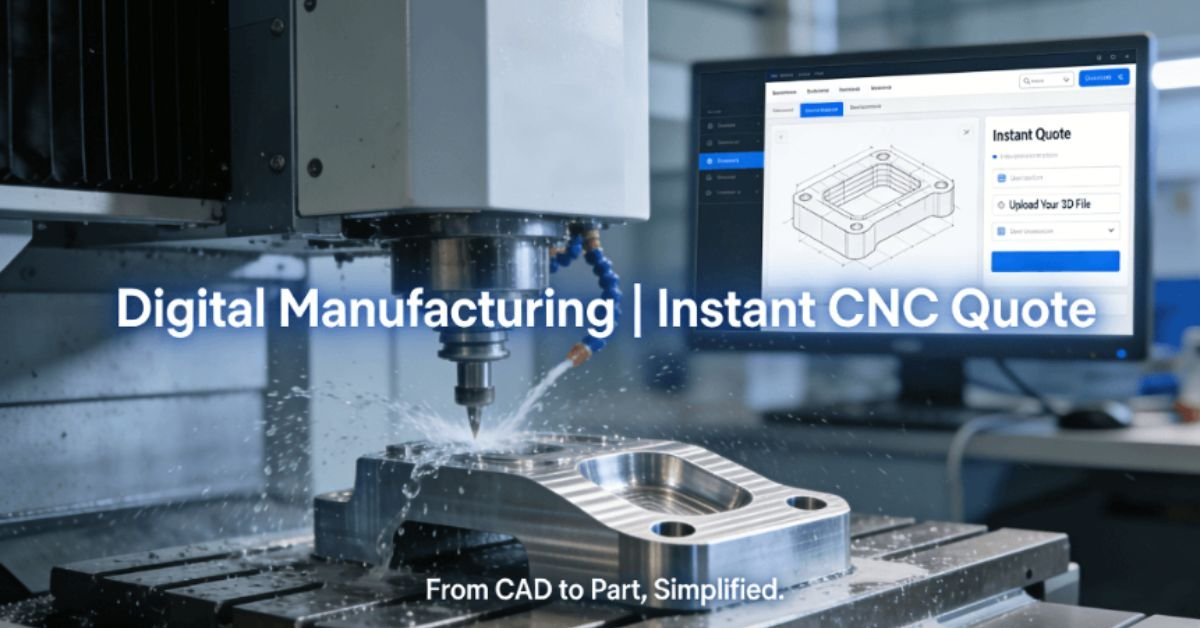
In the world we live in today, which is dominated by the vibrant and constantly evolving startups as well as the big well, known brands, businesses, in general, are facing numerous challenges when it comes to turning physical products from their designs. The case is even more complicated when it is about complex parts. The difficulties in this context refer to delivery delays due to the supply chain, high communication costs, risk of investing blindly, and the problem of locating a suitable manufacturing partner.
The main issue is the traditional procurement process which is not only opaque but also location, dependent. Because of this, it is almost impossible to get fast iteration, keep the budget controlled, and ensure quality. Here we will look at how online CNC milling services open up a completely new world for manufacturing, thus helping businesses get parts produced quickly, cheap, and with confidence.
The following text defines the basic concept of online CNC milling services as a digital manufacturing platform, the transparent workflow from file upload to delivery, and the basic technology of CNC.
Online CNC milling platforms are a paradigm shift from the traditional, relationship-driven manufacturing process to a more streamlined and digital-first approach. At a very fundamental level, online CNC milling platforms are a digital interface for manufacturing, enabling engineers and buyers to directly access precision machining capabilities through a digital interface. They also encompass the entire process, from instant quoting and design for manufacturability (DFM) analysis to order tracking, into a seamless and transparent digital experience.
The procedure of a trusted web, based platform is carefully designed to be both efficient and clear. It involves several steps such as the customer uploading a 3D CAD file (STEP, IGES) to the platform. Instant, automated tooling costs are generated by advanced algorithms by analyzing the geometry of the part, material choice, and quantity.Next, engineers provide an essential step by thoroughly examining the DFM, thus helping the customer to comprehend how the changes in the design can result in savings, easier manufacturing, and better performance. Production starts after the placement of the order and goes on with real, time updates until the delivery of the finished parts..
The service depends on Computer Numerical Control (CNC) milling that is a subtractive manufacturing method wherein computer, controlled rotary cutting tools are used to mill parts from solid material blocks. CNC machining is a highly flexible technique and can be used to fabricate components in a wide range of materials, such as light aluminum alloys to heavy stainless steel, as well as high, performance engineering plastics like PEEK. As suggested by the Society of Manufacturing Engineers (SME), this digital transformation is presently reshaping the production line, thereby turning advanced manufacturing into a more flexible and responsive process than ever before.
The study delves into how the quality can be guaranteed in a systematic way, among other things, through internationally recognized quality management systems, good engineering design, paperwork, and professional certifications related to the industry.
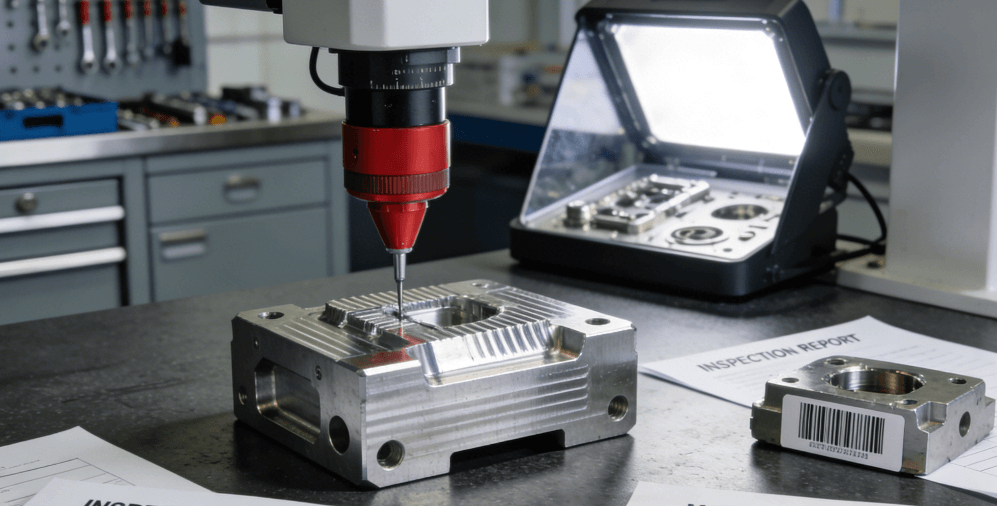
The main secret to getting the highest quality with an online partner is to come up with a partner whose dedication is systemic and not a coincidence. The very beginning is to base on internationally acknowledged quality systems. For instance, meeting the requirements of ISO 9001:2015 standard provides a good basis for a process, focused quality, continuous improvement, and customer satisfaction.Nevertheless, in the real world, quality assurance means much more than just having a certificate. It is demonstrated by thorough inspections of the product during the production and at the end of the production, using the most up, to, date metrology equipment such as Coordinate Measuring Machines (CMMs), where every single measurement is verified to conform to the tightest tolerance level.
Quality is built in from the very first step. One of the main distinctions is getting engineering involved proactively during the DFM process. Experienced engineers analyze the designs and find possible manufacturing problems that can be avoided, thus reducing waste and ensuring the functionality of the parts.In addition, transparency at its highest level is a must, have feature. Trustworthy partners should be able to provide detailed inspection reports, material certificates, and complete traceability of every single shipment, which will allow customers to verify the quality not only by faith but also independently.
It is difficult to overemphasize how crucial the partner’s industry certifications are for companies functioning in a regulated industry. Industry standards such as IATF 16949 for automotive or AS9100D for aerospace set a higher bar for risk management, traceability, and process validation. Working together with a company that has these certifications is an additional way of guaranteeing that they understand the specific needs of high, risk applications and are qualified to handle them. If you want to see how a top online manufacturer lays down its quality principles, check out this exhaustive guide toonline custom CNC milling services for additional details.
Simply put, online CNC milling can be a perfect and cost, effective solution for prototyping and low, volume production.
- Eliminating the Problem of Entry and Repetition: Conventional methods like injection molding require large upfront capital for hard tooling, which makes low, volume manufacturing and prototyping economically not viable and very slow. On the other hand, online CNC milling is a revolutionary change that enables on, demand manufacturing without any tooling costs. This opens up the possibility for startups to make functional prototypes and small batches of production quite cheaply, thus it is possible to rapidly change designs and check them in the real world without the capital expense of mold development. This leads to a major reduction of development time, which allows for faster validation and market entry.
- Unmatched Flexibility and Speed: The flexibility that online CNC services provide is tremendously significant. For example, there is no minimum order quantity (MOQ), so a company can order a single prototype or a few hundred units equally easily. It can take only a few hours rather than weeks for the whole online process from getting a quote to the start of production to be completed. This flexibility allows just, in, time manufacturing and gives a business the ability to rapidly respond to market demands or design changes holding large, scale production commitment.
- Tangible Cost and Time Savings: As a result, the total development cost is significantly decreased. Skipping tooling costs and limiting downtime, companies can anticipate a 30% decrease in product development costs. Fast development leads to less errors that are discovered and corrected at the very beginning of the process, thus preventing extensive rework and high costs later. This model of operation allows startups to have access to high, precision machining that otherwise they could not afford and, at the same time, it enables established companies to introduce new products to the market.
Taking aluminum machining for example, this article delves into the key technical aspects of managing thermal deformation, attaining high surface finish, chip handling, and making right material and process choices.
Aluminum is chosen for its light weight and good strength as well as good machinability, however, its high thermal conductivity is a big disadvantage because, when aluminum is machined, the heat generated can cause it to expand and then contract, which can create problems with the dimensional accuracy of the machined part.Low, stress fixturing and heat dissipation techniques are the ways to tackle this problem effectively. High, speed machining and coolant usage play a vital role in this technique.
Aluminum’s soft and ductile properties can sometimes result in problems related to surface finish and chip removal. A surface finish that is mirror-like can only be achieved with utmost care and control in cutting parameters, cutting tools, and tool path planning to avoid built-up edge on cutting tools. Additionally, aluminum has a tendency to produce long and stringy chips that can re-cut the workpiece if not removed efficiently. This is where advanced CAM software helps in effective chip removal through tool path planning and high-pressure coolant systems.
Basically, not all aluminum materials are equal. Different types of alloy and temper, say 6061, T6 with its exceptional machinability versus the 7075 alloy, which is a stronger material, have an impact on the machining method and the performance of the part in practice. A good and well, established manufacturing partner would, besides, give you valuable insight into mechanical characteristics, based material selection.Furthermore, such a partner will utilize process optimization for each specific alloy type, altering spindle speed, feed rate, and cut depth to get maximum efficiency, tool life, and product quality.
It explains the essential ingredients of a seamless transition from prototype to mass production, including process and data continuity, scalable manufacturing infrastructure, quality consistency, and risk mitigation and total cost effectiveness.
A top, notch manufacturing partner is characterized by a smooth, low, risk transition from prototype to production. The secret to this transition is process continuity. If the same engineering team, using the same digital models, calibrated equipment, and quality processes, is responsible for both prototype development and production volumes, then the risks and inconvenience of re, qualifying a new supplier are eliminated. Hence, a component qualified at the prototype stage will be manufactured in the same way for volume.
The secret to seamless scaling lies in having a production system that can be scaled. A partner having multiple, cutting, edge workshops and advanced scheduling systems can be optimally combining orders and allocating capacity to be able to scale from a few dozen to tens of thousands of parts without compromising lead times or quality. Above all, quality consistency is ensured irrespective of the volume through standardized work instructions, in, process verification, and the application of the same strict final inspection procedures to every batch, from the first prototype to the ten, thousandth production unit.
This combined strategy provides a deeply significant level of risk reduction. Potential manufacturability problems are eliminated in the prototyping and DFM phase, preventing expensive design errors from being carried forward into large-scale production. In this way, by avoiding the need to re-source and re-qualify a new supplier, companies can save a tremendous amount of time and paperwork. The end result is a reduced total cost of ownership and an expedited, more assured time-to-market for new products.
A cost-benefit analysis shows that its worth goes well beyond the cost per unit, as expressed in rapid time-to-market, simplified supply chain, reduced risk, and increased strategic operational flexibility.
- A Holistic View of Cost: More Than Unit Price: Online CNC milling services must be assessed in a manner that moves beyond the unit price per part to a holistic examination of total project cost. Although the cost is clear, the true benefit is in avoiding costs elsewhere. The time-to-market advantage directly correlates to earlier monetization and market differentiation. Moreover, the risk avoidance benefit of expert DFM analysis eliminates costly changes and manufacturing mistakes at the end of the project.
- Quantifying Efficiency Gains and Supply Chain Simplification: The efficiency savings are significant. The digital optimization of the process saves weeks of procurement time, unending emails, and rounds of negotiation. Supply chain simplification is another area where significant gains can be realized. It is much less complicated to manage one digital partner with expertise compared to multiple machine shops in the traditional model.
- The Strategic Value of Agility and Partnership: Ultimately, the value is strategic. Online CNC milling services offer unmatched operational agility, enabling rapid response to design iterations, market test results, or market shifts. It turns manufacturing from a capital-intensive bottleneck into a flexible, on-demand asset. Partnering with a CNC milling precision manufacturer who provides this digital-born model is a strategic investment in resilience, speed, and innovation capacity, which far exceeds the initial benefit of a slightly lower cost per unit from a less transparent, less agile supplier.
Online CNC milling services should be recognized not only as a mere procurement option but also a strategic tool for nowadays businesses that require agile product development, controlled project risk, and maximized operational efficiency. By embracing this digitally transparent manufacturing model, enterprises will be able to divert their focus and resources from complicated supply chain problems to their main strengths of design and innovation. Moreover, the ability to efficiently transform complex ideas into top, notch physical parts can serve as a key competitive advantage in a world where speed, accuracy, and flexibility are crucial.
Q1: How fast can I expect to get parts from an online CNC milling service?
A: The turnaround times differ but it is not impossible to have a 1, 3 day delivery for simple prototypes. The principal advantage is the rapid quoting and the efficient procedure which leads to a major time reduction in comparison with traditional services.
Q2: When I upload my file for an online quote, is my design information protected?
A: Certainly, trustworthy companies take care of IP protection and they use enterprise, level encryption, secure servers, and NDAs. To be confident check their privacy policy and security measures.
Q3: What file formats do I need to supply for an accurate online quote?
A: We prefer 3D CAD files such as STEP or IGES since they contain the precise geometry of the model. The fastest and most accurate automated quoting also requires a clean and sealed model.
Q4: Can online CNC milling be done on very complex parts with tight tolerances?
A: Yes, complex parts can be created easily using multi, axis (for instance, 5, axis) machines available on advanced platforms, and these machines can make the parts in just one setup. Proper quality control procedures along with the use of top, notch machines will render the manufacture of tight tolerance parts a piece of cake.
Q5: How does the cost of low, volume production compare to injection molding or other processes?
A: Injection molding is usually less price efficient for the production of less than medium quantities of parts compared to CNC milling. This is due to the fact that CNC milling does not involve any tooling costs. Parts that are a few thousands in quantity are generally where production is stopped before the cost of injection molding goes down low enough to the point that CNC would no longer be the most economical.
The article author is a manufacturing expert who specializes in precision and has more than fifteen years of experience in the industry. During the years, the author has been focused on helping engineers and companies tackle the most difficult part manufacturing challenges. The author’s company, which holds ISO 9001, IATF 16949, and AS9100D certificates, is dedicated to providing excellent, reliable, state, of, the, art solutions via their online platform. If you are willing to optimize your production process, LS Manufacturing offers instant quotes and expert DFM analysis to help you realize your ideas.
 Prime Star